Disclaimer: I currently work at Fronius. No components have been provided by the company Fronius. All components were paid for by myself. I receive no compensation for writing about this conversion. Please do not understand this as advertising, but as a pure experience report. This is not a guide or advice. Technical regulations can change depending on the prerequisites.
Goals Link to heading
- Conversion of the system from microinverters to string inverters.
- 3-phase rotating field in backup power operation.
- Preparation for battery storage and backup power switching.
Initial Situation Link to heading
- Annual total consumption ~2500 kWh
- Grid access 4 kW
- Feed-in limit 4 kW
Hot Water Preparation Link to heading
Boiler for hot water preparation with air heat pump: warmwasser-waermepumpe-wpa-450 Nominal power consumption ~1 kW (heat pump)
Heating Link to heading
In winter, cooking is done daily on a table stove with through-heating in a tiled stove. On average, we need about 2m³ of softwood and 2m³ of hardwood logs. The wood is processed, dried, and made into firewood in our own forest. The house is built so that most of it is heated by the tiled stove. This drastically reduces the need for electrical energy.
If there is no wood in the stove (which almost never happens), we can still use infrared panels in the living rooms and electric underfloor heating in the bathroom. We do not have a water-based heating system in the house, which has proven to be very effective so far.
PV Planning Link to heading
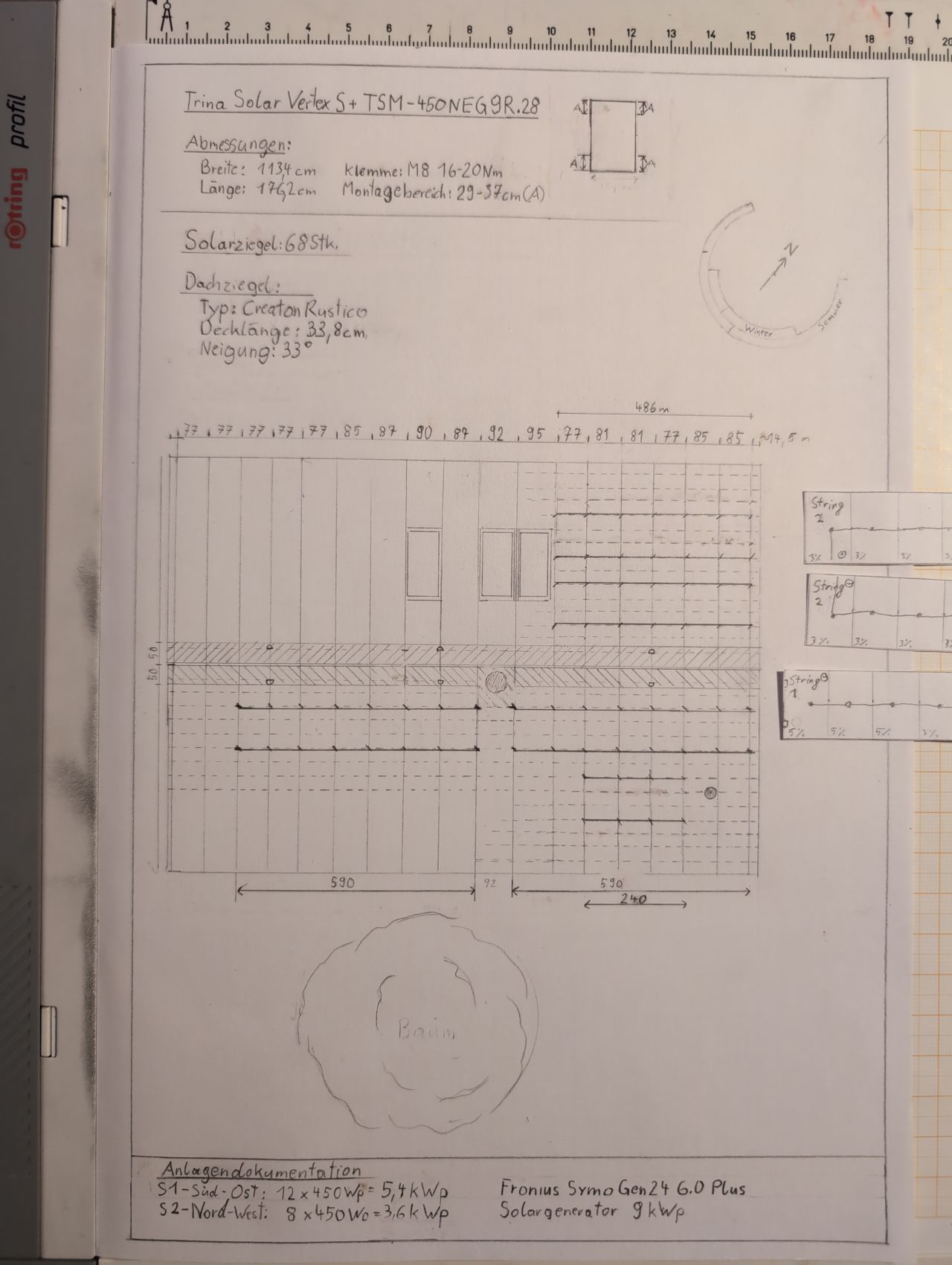
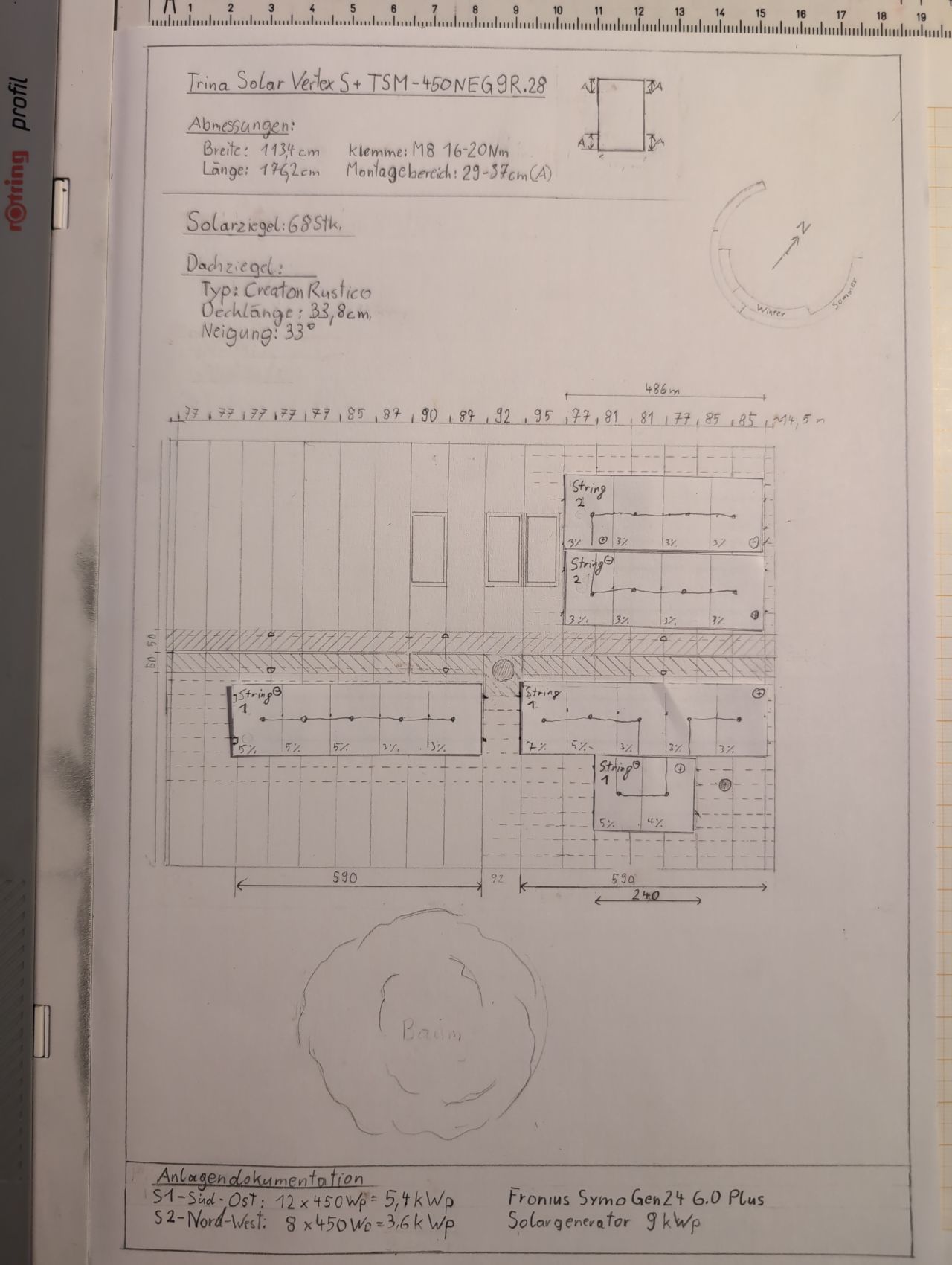
- 9 kWp generator capacity
- 12 panels facing southeast, 33° roof pitch, on PV1 in the inverter.
- 8 panels facing northwest, 33° roof pitch, on PV2 in the inverter.
- 6 kW inverter
- Fronius Symo GEN24 6.0 plus connected via LAN
- 3-phase string inverter with rotating field as preparation for backup solution and battery pack
- 4 kW dynamic feed-in limitation
- Smart meter IP with current transformers
- Grid-independent backup solution
- Fronius PV Point
- Preparation for 12 kW electrical storage
- Plus series is prepared for battery storage
- Integration into Homeassistant
- Community Fronius integration and Solar API directly from the inverter
- Connect AMIS reader to WLAN and also send values via MQTT
- Time control of hot water preparation
Plan (old school) Link to heading
Implementation Link to heading
Registration with NetzOOE Link to heading
Since this is an expansion of the system, I registered this expansion with my grid operator. As always, it was very uncomplicated, and even if there are problems with the form, the responsible people help you in an uncomplicated and very friendly manner. Since the substation or a transformer is already reaching its limits, we were given the requirement to limit the feed-in power to a maximum of 4 kW.
Components Link to heading
- Fronius Symo GEN24 6.0 plus 1x
- Fronius Smartmeter IP 1x
- Mitterbauer AMIS reader 1x
- Trina Solar Vertex S+ TSM-450NEG9R.28 20x
Construction Link to heading
Substructure Link to heading
The construction of the substructure was one of the bigger surprises and challenges. It was also surprising that the substructure on the tiled roof causes higher material costs than the solar generator itself. I am used to working at heights and also handling ropes and harnesses; the safety hooks on the roof were installed by the roofer during the new build. My tip for a new build is to have the substructure built in at the same time for a DIY system. In retrospect, this is already a bit more effort, and the screws and sheet metal roof tiles are also not to be underestimated in terms of cost. The substructure is integrated into the equipotential bonding. If lightning protection is present, it should be clarified with a lightning protection expert how the PV system should be integrated.
Wiring Link to heading
I laid the string cables in aluminum pipes, which are integrated into the equipotential bonding. Also indoors. In the case of a fire, aluminum pipes do not melt as quickly, and if the solar generator cannot be switched off during firefighting operations, it can be dangerous for emergency crews if water hits several hundred volts of DC voltage. The Fronius inverter has a DC switch with which the solar generator can be disconnected. Nevertheless, a disconnect box should be installed at the roof entry, especially if the inverter is not accessible from the outside. This gives the emergency crews the possibility to disconnect the solar generator even under load. When laying the solar panels, care must be taken to ensure that no induction loops are created. Plus and minus cables should be run as parallel as possible, otherwise high voltages can be induced in the event of a nearby lightning strike, and an indirect lightning strike can cause damage. Even if most disconnect boxes and also the Fronius inverter can be equipped with surge protection modules, induction loops should be avoided. MC4 connector is not the same as MC4 connector. Therefore, always use connector pairs from the same manufacturer. If a different connector is installed on the solar panel, caution is advised. I like to use Weidmuller PV Stick with SNAP IN connections. With this connector type, no crimping tool is needed, but you should have good hearing. If the connector type on the PV modules is different, the connector on the module side must also be mounted at the transitions to string cables. Connector pairs should not be mixed.
Inverter Link to heading
The inverter itself is connected with 6² equipotential bonding and in my case 4² AC side supply line. The equipotential bonding is required for the surge protection module, which can be additionally installed in the GEN24 models. The Wago terminals are very comfortable during installation, and overall the GEN24 has made a good impression. The connections of the pilot (control module) are, however, already a challenge. Have you ever tried to get the shield of a CAT 5e SFTP cable into the connectors to ensure shielding on the Modbus line? There is room for improvement there. The initial setup is intuitive and simple for standard systems.
Smart Meter IP Link to heading
For the price, I would have expected better workmanship of the mechanics regarding the top-hat rail mounting. It is also worth mentioning that the current transformers are individually packaged and must be purchased separately. Here, a Smart Meter IP with direct measurement up to 63A would be desirable.
Automation Link to heading
- Homeassistant in Docker on existing Linux Nextcloud server
- Docker MQTT server
- Data on NFS storage
Reading Meter Data Link to heading
The Fronius Smart Meter IP offers the possibility to read energy data, and via Modbus, Modbus TCP, or MQTT, the data can be processed by the inverter. Since the existing AMIS reader integrates well into Homeassistant, I have the possibility to compare the data. The control of consumers is realized via Homeassistant, as it provides comprehensive integrations.
Automation and Analysis Link to heading
Solarweb Link to heading
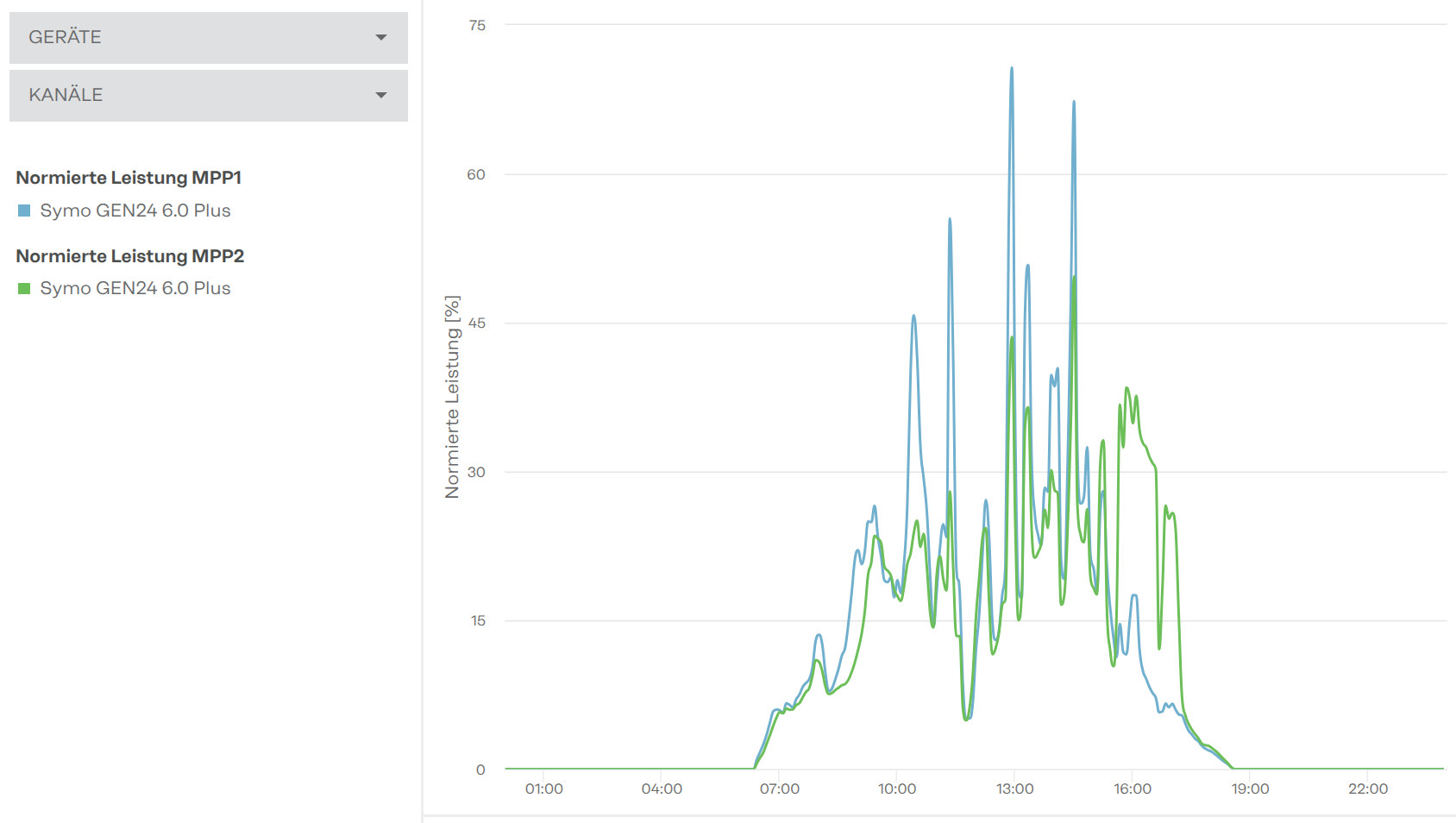
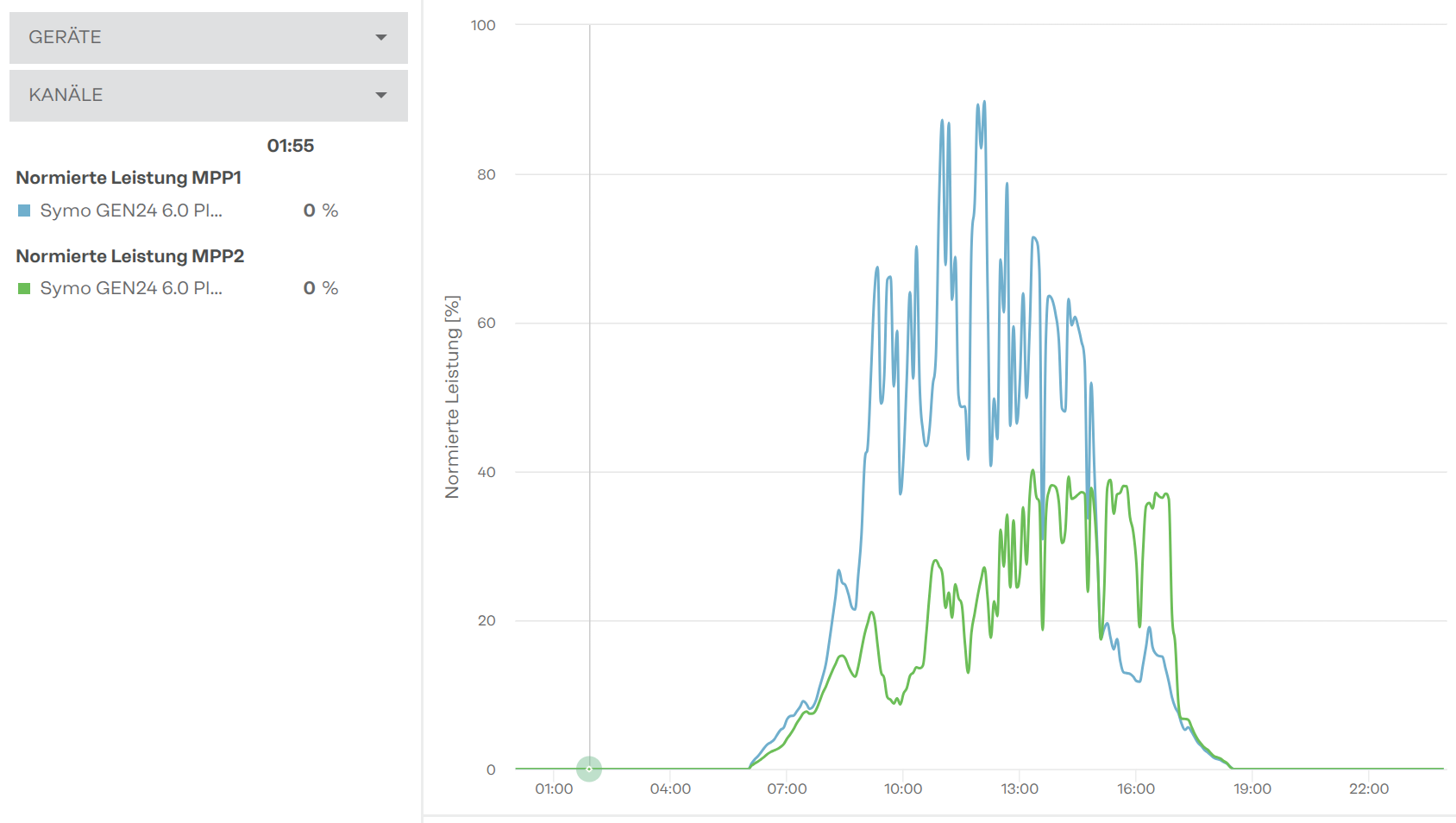
MPPT Tracker PV1 + PV2 Link to heading
Energy Balance Link to heading
Adapting Consumers to Generation Link to heading
The infrared panels consume between 500W and 1600W. Depending on the priority in the room, these can be switched differently.
This way, the required power can be well regulated during the transition period, even if no battery is present.
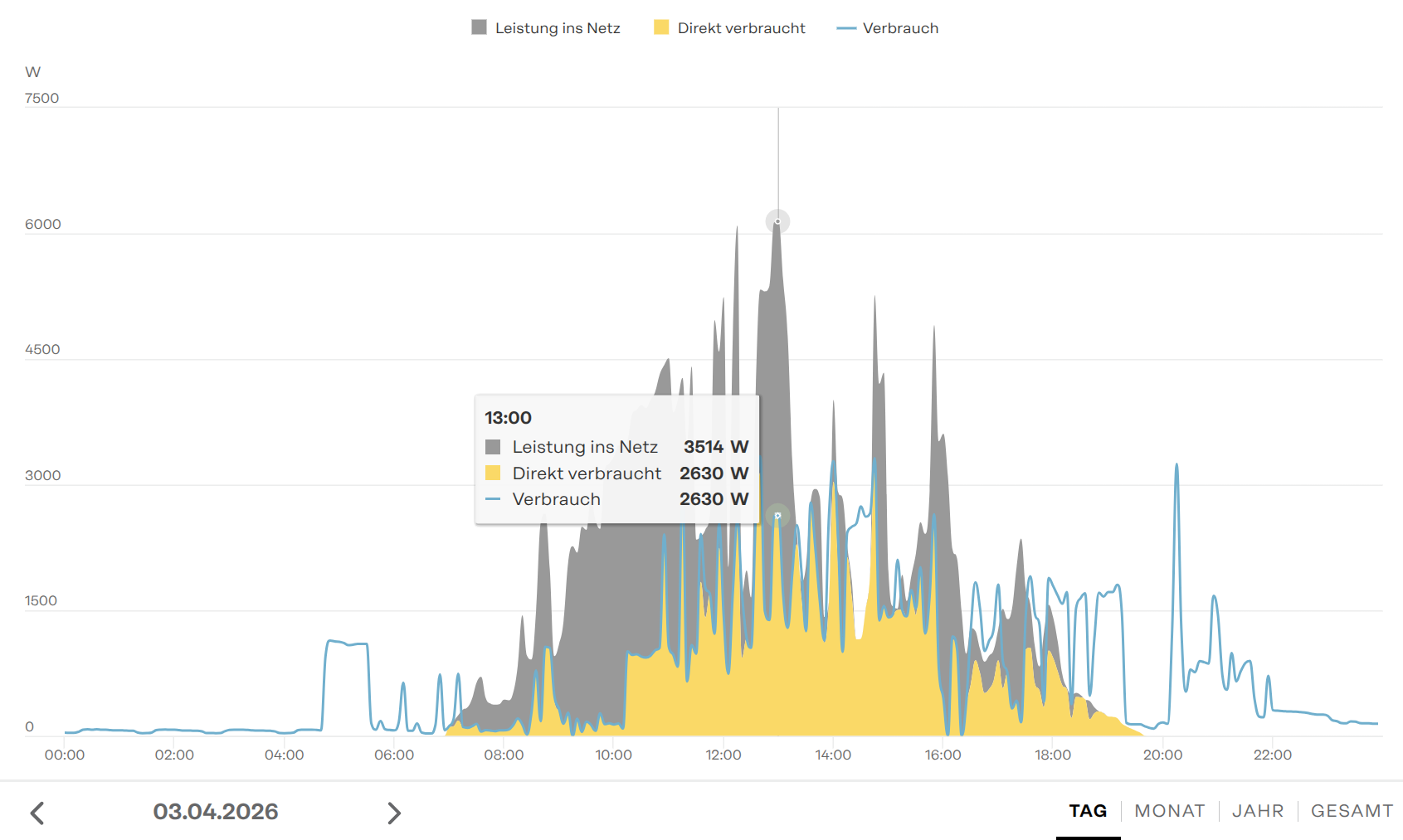
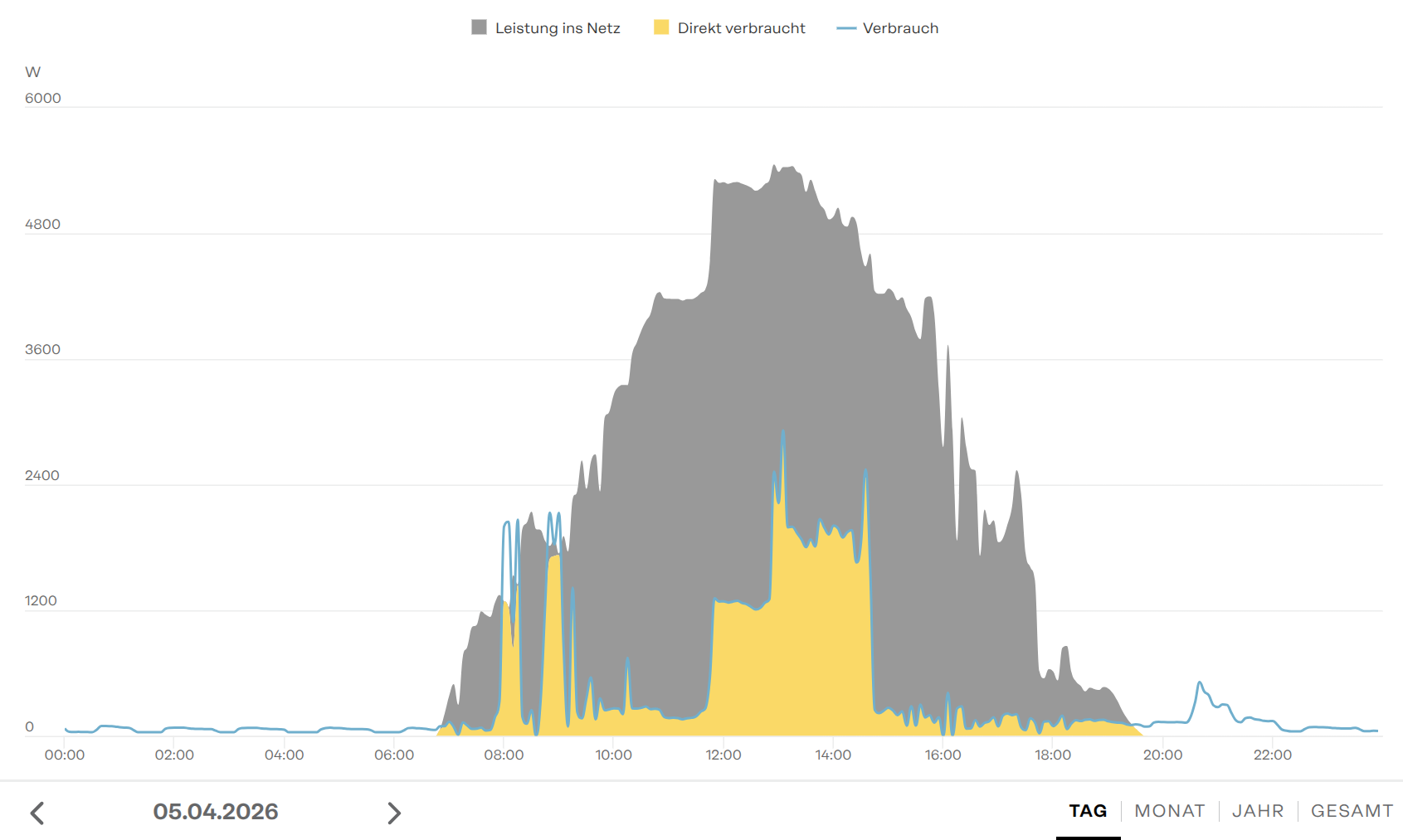
Dynamic Feed-in Limitation Link to heading
If too much power is available, the inverter can limit the feed-in. With constant surplus, the heat pump of the boiler is activated, and the surplus is fed into the grid.
Homeassistant Link to heading
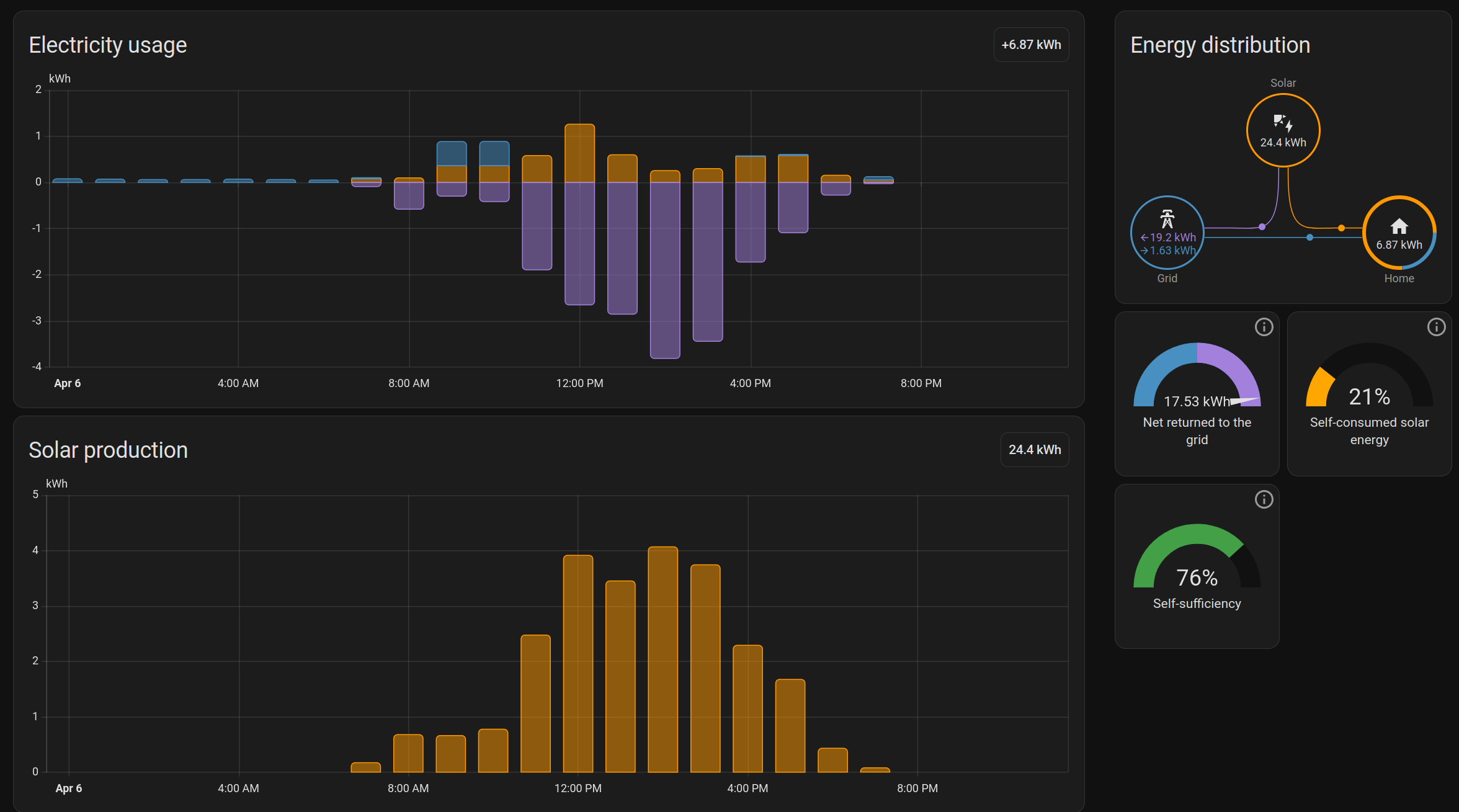
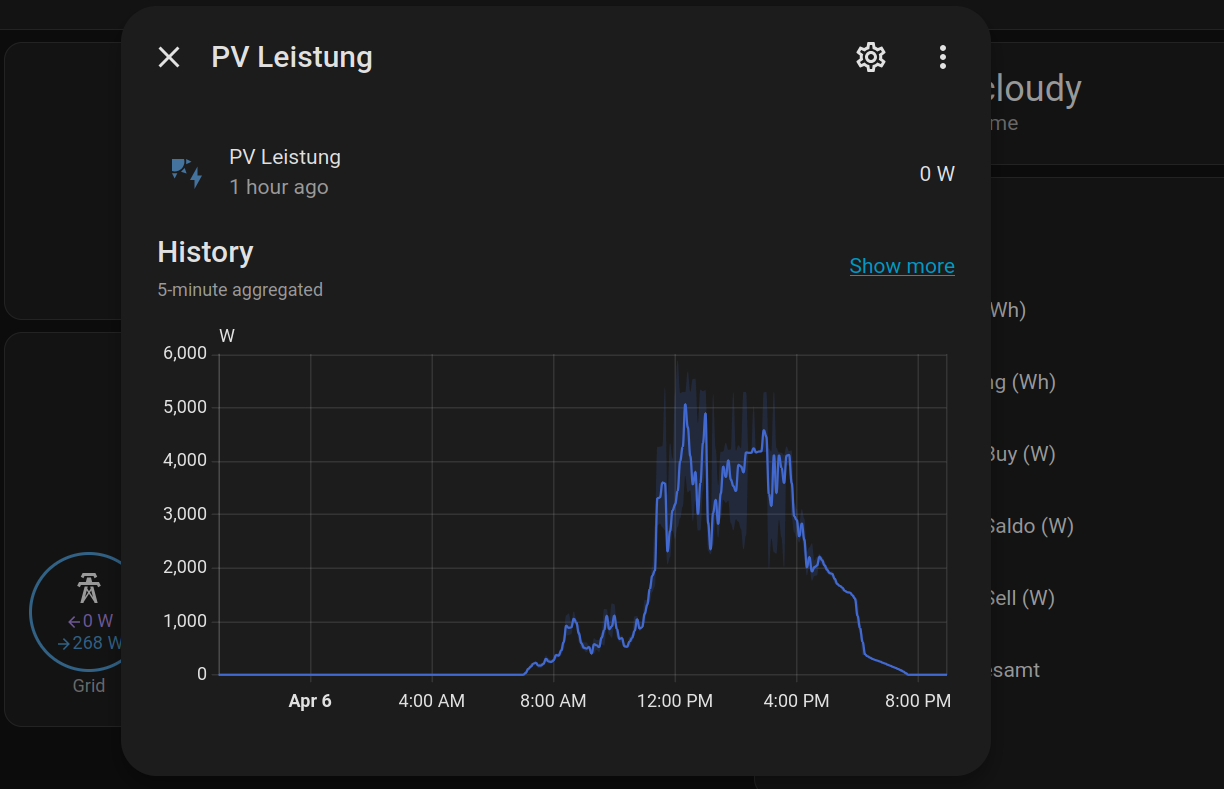
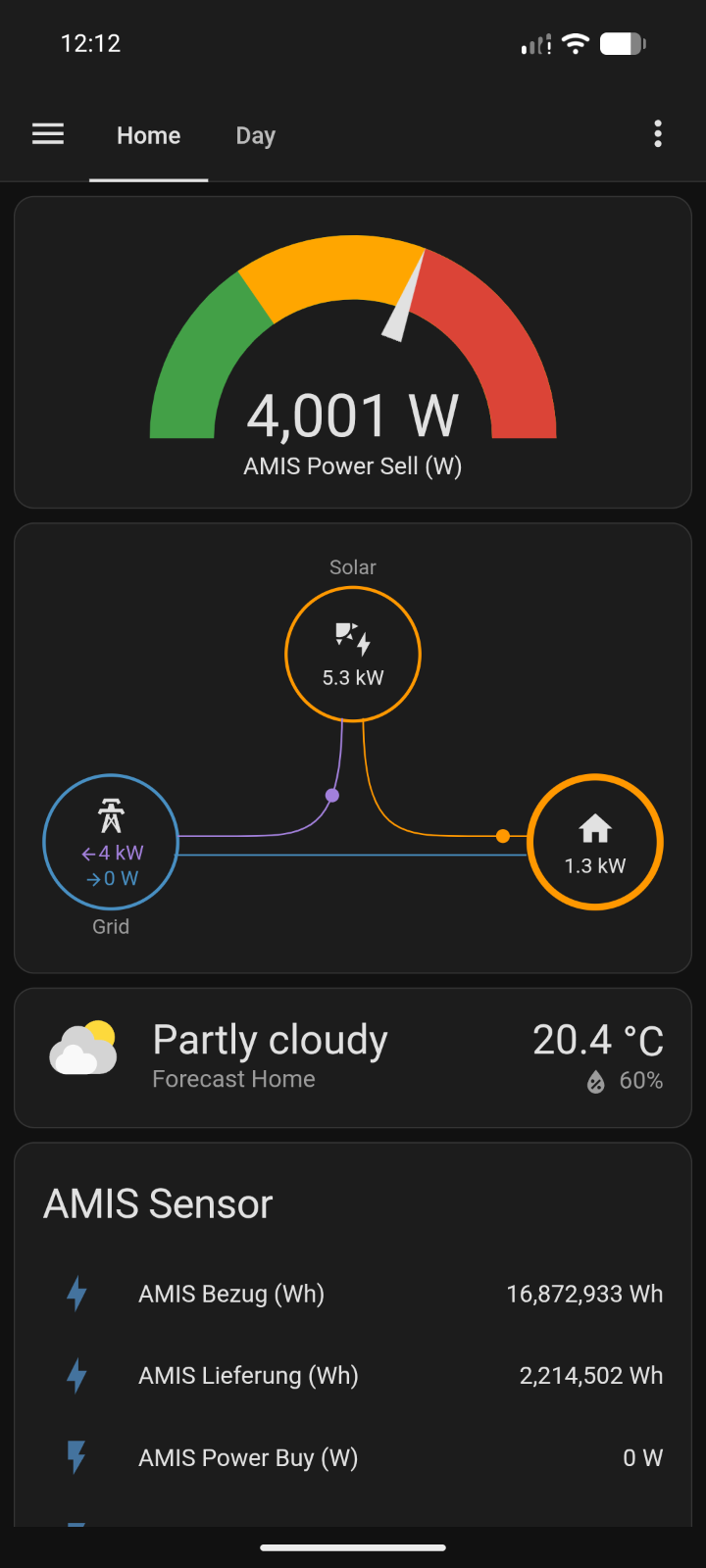
With Homeassistant, you have many possibilities to create dashboards yourself and thus experiment.
I also like to use the app on my mobile phone to control devices and automate scenarios.
Planning Further Expansion Link to heading
- Battery storage
- Optimize consumer control. Washing machine, dryer, dehydrator, and dishwasher could still be devices that can be optimized. However, I think that this topic will fade into the background with the battery storage. Since we heat with a tiled stove and stove in the winter months, the most electrical energy consumption in winter is still hot water preparation.